Motor learning in fruit flies: what happens where and how to improve it
- Version
- Download 482
- File Size 0.00 KB
- File Count 1
- Create Date November 7, 2025
- Last Updated November 7, 2025
Motor learning in fruit flies: what happens where and how to improve it
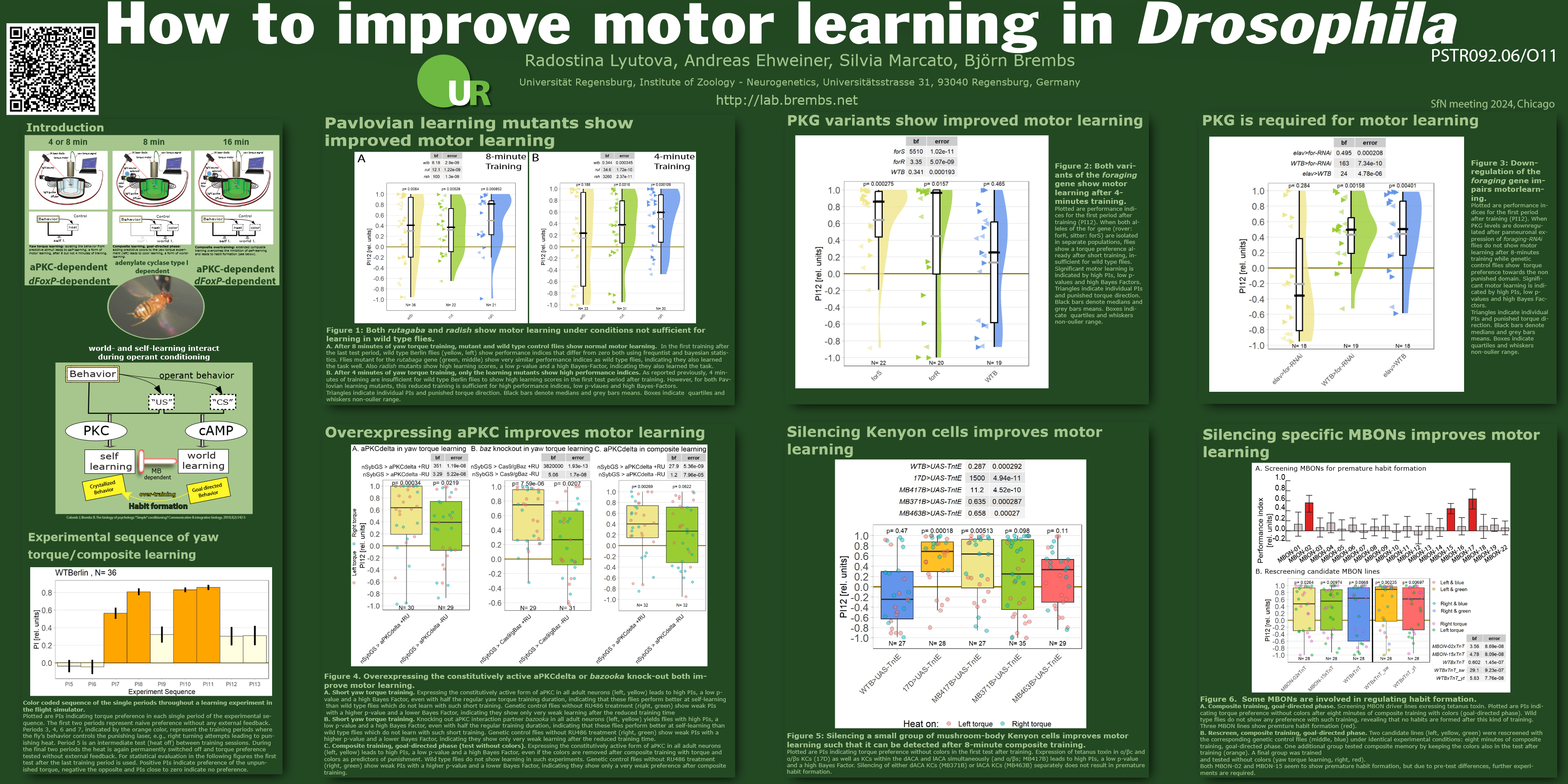
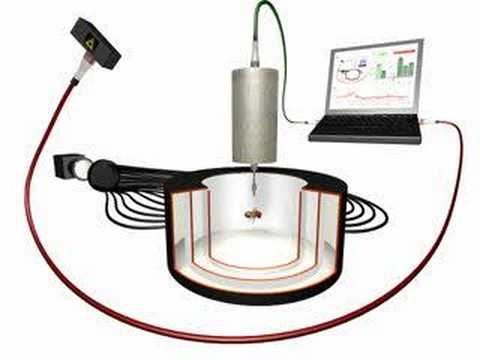
Humans use motor learning to learn how to speak, walk, write or ride a bike. Motor learning is essential also for sports or rehabilitation after stroke or spinal injury. Evidence suggests that all forms of motor learning share an evolutionarily conserved molecular plasticity pathway. We use motor learning in the fruit fly Drosophila to study the neurons where the plasticity occurs, the molecular processes mediating the learning as well as various methods to improve motor learning. We operantly trained wild type, mutant and transgenic flies, tethered at a torque meter, in a motor learning task that required them to initiate and maintain turning maneuvers around their vertical body axis (yaw torque). We combined this behavioral experiment with transgenic peptide expression, CRISPR/Cas9-mediated, spatio-temporally controlled gene knock-out, gene overexpression, neuronal activity manipulation and confocal microscopy. Our evidence suggests that a crucial site of plasticity for this type of motor learning resides in the steering motor neurons that control wing beat angles, which, in turn, contribute to generating yaw torque. Our results imply that co-expression of the genes FoxP and aPKC is required in these steering motor neurons for motor learning to take place. We have also discovered that the foraging gene (a PKG) is necessary for motor learning and are investigating the site of PKG action. This type of motor learning is also highly regulated, such that it can establish a memory quickly or only after sustained training. Part of this regulation involves interactions with other learning systems. We can improve motor learning by genetically manipulating these other learning systems via, e.g. the rutabaga or radish mutants, or via altering the activity of the neurons mediating the interaction (mushroom body neurons and mushroom body output neurons). Overexpressing aPKC also improves motor learning.