Tethering a fly for stationary flight allows for exquisite control of its sensory input, such as visual or olfactory stimuli or a punishing infrared laser beam. A torque meter measures the turning attempts of the tethered fly around its vertical […] ↓ Read the rest of this entry…
Archive for original-research
30 results.
To understand how transposon landscapes (TLs) vary across animal genomes, we describe a new method called the Transposon Insertion and Depletion AnaLyzer (TIDAL) and a database of >300 TLs in Drosophila melanogaster (TIDAL-Fly). Our analysis reveals pervasive TL diversity across […] ↓ Read the rest of this entry…
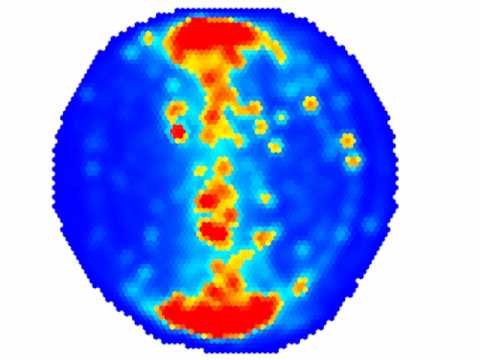
We collected five sub-strains of the standard laboratory wild-type Drosophila melanogaster Canton Special (CS) and analyzed their walking behavior in Buridan’s paradigm using the CeTrAn software. According to twelve different aspects of their behavior, the sub-strains fit into three groups. […] ↓ Read the rest of this entry…
Posted on April 17, 2015
at 15:35
Intact function of the Forkhead Box P2 (FOXP2) gene is necessary for normal development of speech and language. This important role has recently been extended, first to other forms of vocal learning in animals and then also to other forms […] ↓ Read the rest of this entry…
Posted on January 5, 2015
at 16:28
Three groups of juvenile salmon were introduced sequentially into an artificial stream to investigate the effects of prior residence on behaviour and territory choice. Almost half of the first group obtained and defended distinct territories, the other half being constrained […] ↓ Read the rest of this entry…
Posted on January 5, 2015
at 16:28
Operant conditioning is a form of associative learning through which an animal learns about the consequences of its behavior. Here, we report an appetitive operant conditioning procedure in Aplysia that induces long-term memory. Biophysical changes that accompanied the memory were […] ↓ Read the rest of this entry…
Posted on January 5, 2015
at 16:28
Ever since learning and memory have been studied experimentally, the relationship between operant and classical conditioning has been controversial. Operant conditioning is any form of conditioning that essentially depends on the animal’s behavior. It relies on operant behavior. A motor […] ↓ Read the rest of this entry…
Posted on January 5, 2015
at 16:28
The cuticular melanization phenotype of black flies is rescued by beta-alanine, but beta-alanine production, by aspartate decarboxylation, was reported to be normal in assays of black mutants, and although black/Dgad2 is expressed in the lamina, the first optic ganglion, no […] ↓ Read the rest of this entry…
Posted on January 5, 2015
at 16:28
Björn Brembs, Douglas A. Baxter, and John H. Byrne (2004): Extending In Vitro Conditioning in Aplysia to Analyze Operant and Classical Processes in the Same Preparation. Learn. Mem. 11: 412-420 Abstract: Operant and classical conditioning are major processes shaping behavioral […] ↓ Read the rest of this entry…
Posted on January 5, 2015
at 16:28
Jan05
Flight Initiation and Maintenance Deficits in Flies with Genetically Altered Biogenic Amine Levels
Insect flight is one of the fastest, most intense and most energy-demanding motor behaviors. It is modulated on multiple levels by the biogenic amine octopamine. Within the CNS, octopamine acts directly on the flight central pattern generator, and it affects […] ↓ Read the rest of this entry…
Posted on January 5, 2015
at 16:28